Lean construction starts in the office, not on the factory floor.
Most people treat lean construction as a factory-floor discipline. That’s fair enough, because that’s where it started. Toyota’s production system gave us takt time, single-piece flow, and visual management. All of it dealt with physical waste you could photograph and measure. But the most overlooked waste in lean construction today isn’t on the floor at all. It’s in the office, in the inboxes and shared drives, where drawings and information move between people.
Lean was never really about factories. It was about working out where value actually gets created and cutting everything else. The factory was simply the first place where anyone applied that logic systematically.
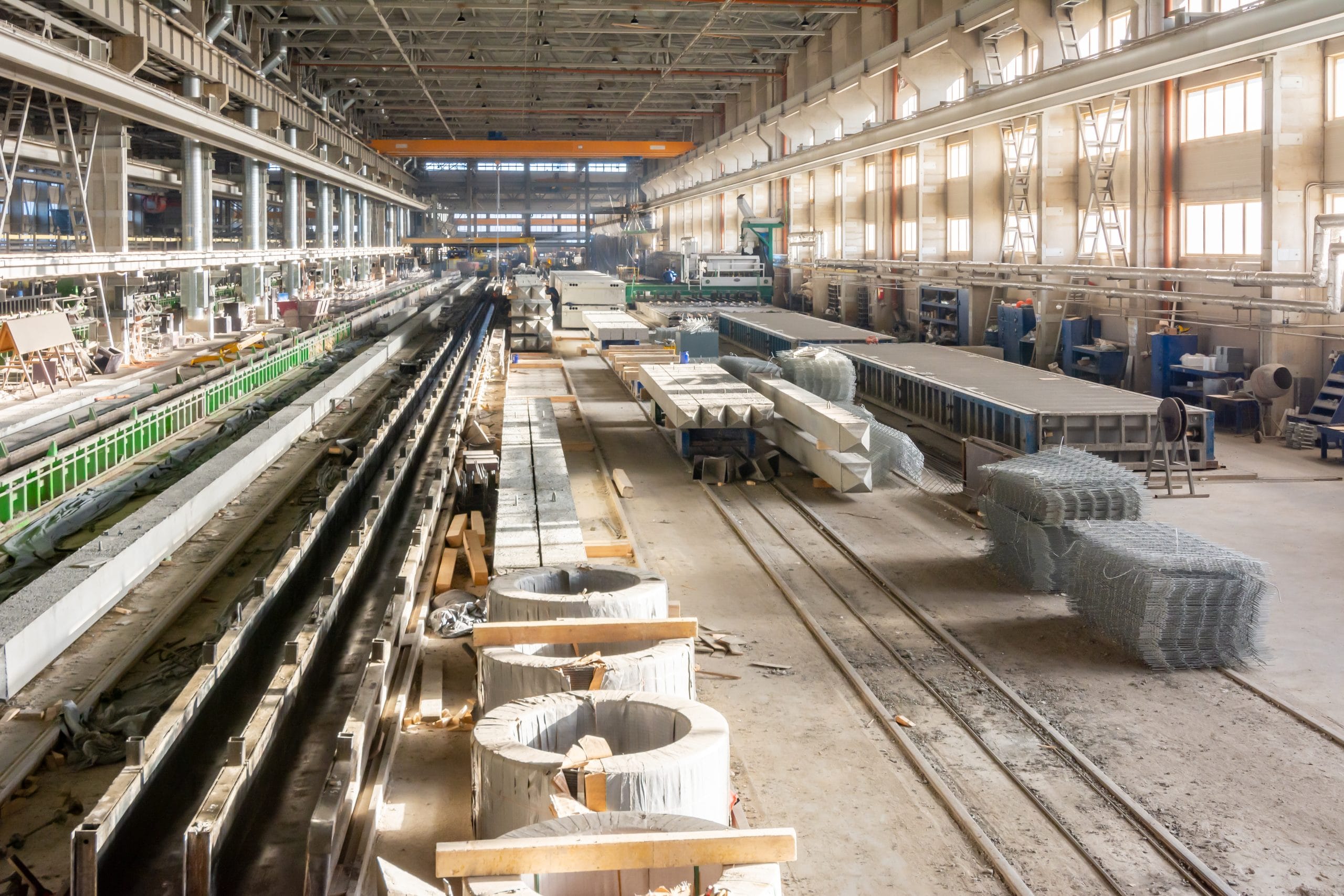
I’ve spent more than twenty years in and around precast plants. The physical waste is usually visible once you know what to look for: beds sitting idle, product waiting on inspection, reinforcement cut to a drawing that changed yesterday before anyone told the yard. That waste gets attention because you can see it. Someone walks the floor, points at it, and calls a meeting.
The waste that doesn’t get attention is the administrative and cognitive kind. It sits one step back from the pour, in the offices where drawings, schedules, and information move between people. In most plants I visit, that’s where the larger opportunity lies, precisely because nobody is walking through it and pointing out problems.
Why office waste stays hidden
Physical waste announces itself. A stack of rejected panels takes up space. An idle bed shows up in the production numbers. The cost is legible.
Office waste behaves differently. When an engineer spends two hours reconciling a schedule that two systems report differently, nothing piles up in a corner. The work still gets done. The drawing still goes out. From the outside, the process looks healthy. The cost is real, but it’s spread thin across hundreds of small moments and buried inside salaries that get paid whether the time was well spent or not.
This is why the office side rarely gets the lean treatment that the floor does. There’s no obvious thing to point at, so there’s no obvious trigger to investigate. The waste compounds quietly, year after year, until “that’s just how we do it here” becomes the explanation for processes nobody would design from scratch.
The forms office waste actually takes
It helps to name the categories because once you do, you start seeing them. Three of the classic lean wastes translate almost directly from the floor to the office.
Waiting
On the floor, a bed sits idle. In the office, it’s a production query stuck in someone’s inbox while the bed waits on the answer. The person who raised the question moves on to other work, the person who can answer it is in a meeting, and the gap between question and answer becomes dead time that nobody records anywhere.
Over-processing
On the floor, this is finishing a surface to a tolerance the spec never asked for. In the office, it’s reformatting the same information three times for three different documents, or producing a report in a level of detail nobody downstream reads. The effort feels like diligence. Often it’s just motion.
Defects and rework
On the floor, a defect is a cracked unit. In the office, it’s a drawing built on a superseded revision, a production sheet that contains a transcription error, or a handoff in which a crucial detail was assumed rather than confirmed. The rework this generates is among the most expensive forms of waste in the entire operation, because by the time it surfaces, steel may already have been cut and concrete may already have been poured.
None of these is a failure of the people involved. They’re failures of the systems those people work inside. That distinction matters because the instinct when you spot the waste is to ask who’s responsible. The more useful question is what in the process made the waste likely to occur.
A handoff, watched closely
Consider what happens at a design-to-production handoff, the kind that occurs dozens of times a week in any active plant.
A drawing gets issued. Someone in production reads it and has a question, maybe about a detail that’s ambiguous, maybe about a clash with how the bed is actually set up. That question goes back to the design team. The detailer who drew it is on something else now, so there’s a delay. Three emails later, the answer comes back. By then, the setup had often gone ahead on a best guess, because the bed couldn’t sit waiting.
Nobody in that chain did anything wrong. Each person acted reasonably given what was in front of them. But the process produced waiting, rework risk, and a decision made on incomplete information. Multiply that by the volume of handoffs in a week, and you have a meaningful drain that never appears in any production report, because none of it happened on the floor.
This is the work that value stream mapping was built for. The same technique that maps the flow of a panel from casting to dispatch can map the flow of a drawing from issue to query to answer. Most companies have never pointed it at the office.
What AI changes, and what it doesn’t
The traditional lean approach is to map the process, identify waste, and redesign the flow. You still do the same steps, just better.
Some of this work now sits in a different category. Repetitive drawing checks, pulling information from specs and reformatting it for production sheets, generating reports that follow the same structure every time: a fair amount of it can be handled without a person doing it by hand. To be clear, that’s not new in itself. Templating and rule-based automation have chipped away at this kind of work for years. What has changed is the range of tasks now within reach, particularly anything involving unstructured documents and text that older automation couldn’t parse.
So the lean question shifts. It moves from “how do we do this more efficiently?” toward “does this need doing at all, and if it does, does it need a person doing it?”
Task or judgment?
That’s a harder question to sit with, because it means looking at work skilled people currently do, engineers, detailers, BIM coordinators, and asking whether the value is in the task or in the judgment behind it. Often, the task is just the packaging around the judgment. Something else can handle the packaging. It can’t handle the judgment, and it’s worth being honest about that line.
It’s also worth being honest about where this goes wrong. Automate a check that was catching real errors, and you can lose the catch along with the effort. Hand a document-summarising tool a set of inconsistent source files, and it will produce a confident, tidy summary that’s wrong in ways nobody notices until the unit is cast. AI doesn’t remove the need for judgment about where errors hide. It moves that judgment upstream, into deciding what to automate and how to verify it. A faster broken process is still broken, and an automated one can be harder to spot.
Diagnosis before tools
The temptation, once you see the problem, is to reach straight for software. A new platform. A new integration. A tool that promises to fix the handoff. But buying a tool before understanding the workflow is how plants end up with expensive systems that automate the wrong thing.
The diagnosis comes first. Map where the time actually goes, not where you assume it goes. Sit with the people doing the work and trace a drawing, a query, or a schedule through its real path rather than its official one. Separate what adds value from what doesn’t. Only then decide what to fix, what to redesign, and what to stop doing. Technology, if it’s needed at all, comes after that decision, not before it.
Where to start
If this is sitting in office work you’ve never examined, the starting point isn’t a tool or a budget. It’s a single workflow and an honest look at it.
Pick one workflow
Pick one process that you already suspect is heavier than it should be. The design-to-production handoff is a common candidate, but it could equally be how change orders move, how production schedules get built, or how a single drawing revision propagates through the plant. Choose one, not five. The point is to learn the method on something manageable, not to boil the ocean on the first attempt.
Trace it as it really happens
Then trace it as it actually happens, not as the procedure says it should. This is the part most people skip. The official process is documented. The real process lives in the workarounds, the side conversations, and the “oh, we always just call her directly” steps that never got written down. Sit with the people doing the work and follow one real instance from start to finish. Note every point where the work waits, every point where information gets reformatted or re-entered, and every point where someone makes a decision on incomplete information.
Separate value from overhead
Separate the value from the overhead. For each step, ask a blunt question: if this step disappeared, would the finished product be any worse? Engineering judgment survives that test. A drawing being reformatted for the third time does not. You’re not looking to speed up the overhead. You’re looking to find out how much of it shouldn’t exist at all.
Resist fixing things as you go. The instinct, the moment you spot a problem, is to solve it. Don’t, not yet. A workflow understood only halfway leads to fixes that shift the bottleneck elsewhere rather than removing it. Map the whole thing first, then decide.
Only then ask about tools
Only then ask whether technology helps. By this point, you’ll know what the process is for, where it leaks time, and which steps carry real judgment. That’s the position from which a software decision actually makes sense, because you’ll be automating a process you understand rather than buying a tool and hoping it imposes one. Some of what you find won’t need software at all. A handoff that fails because a question has nowhere to go gets fixed by giving it a destination, not by buying a platform.
None of this requires a consultant, a budget line, or permission from anyone. It requires a notebook, a few hours with the people who do the work, and a willingness to look honestly at processes that have earned their place mostly by never being questioned.
The point of lean construction is value, wherever it hides
Lean construction has spent decades sharpening the factory floor. The same thinking, applied to design workflows, information flows, and handoffs between teams, remains largely untouched in most companies. That’s where the next round of gains sits.
That’s the work we do at Lean Precast Solutions: not selling systems, but starting with the workflow. The tools, where they’re needed, come afterwards.
The waste is there. It’s just sitting somewhere most people aren’t looking, in inboxes and shared drives and the gaps between teams rather than out on the floor where you’d think to check.
If you’ve mapped your design or engineering workflows the way you’d map a production line, value stream mapping and waste identification applied to the office rather than the floor, I’d be interested in hearing what you found.