
DfMA in Precast Concrete: Why Projects Fail Before They Reach the Factory
I have spent over two decades inside precast manufacturing, and there is a conversation I keep having with manufacturers. It runs like this. We invested in better formwork, faster curing, and automated rebar tying. We cut our production cycle times. But the project still ran late, the margin was still thin, and the client was still unhappy.
The investment was real. The improvement was real. But it landed in the wrong place, at the wrong stage.
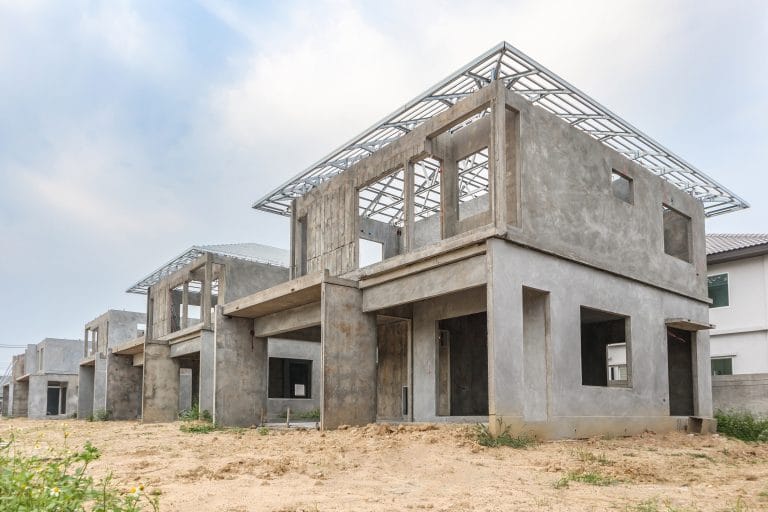
Here is the part most people get backwards. Precast projects do not fail because the factory falls short. They fail before the drawings ever reach a factory. The structure gets designed for a traditional method, whether that is cast in situ, blockwork, a structural steel frame, or a hybrid of these, and then the method gets switched to precast late. By then, the decisions that govern cost are already fixed. That is not a manufacturing problem. It is a design problem, and it sits with whoever set the structure without thinking about how it would be made.
DfMA is the fix, but only if it is applied at the start. Designed early, it amplifies every advantage of factory-based construction and strips out waste. Bolted on late, after the project has been converted to precast, it does the opposite. The conversion itself creates delays and rework, which erodes the margin or wipes it out entirely.
What DfMA is, and what it is not
Design for Manufacture and Assembly is a way of designing, not a way of producing. People mix this up constantly, and the mistake is expensive.
DfMA means designing a building from the first sketch with the construction method in mind, so that components can be manufactured efficiently in a factory and assembled quickly on site. The thinking starts at the architect’s desk, not at the factory gate.
It is not about improving how you cast a beam that somebody else has already designed. That is adaptation. And adaptation, however skilled, always creates waste.
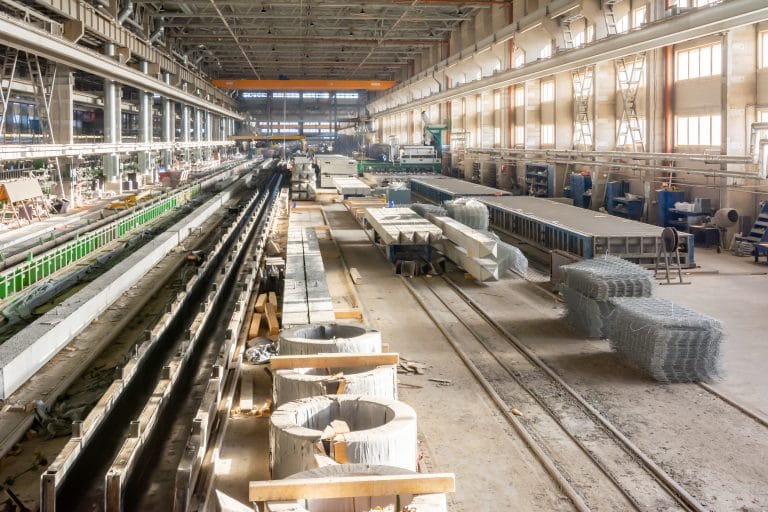
When a project reaches a precast manufacturer already designed around another method, what follows is a chain of compromises. Reinforcement that does not suit cage fabrication. Connection details that fight the standard production sequence. Element sizes that do not travel. Geometries that need one-off moulds. The factory starts behind, and it cannot fully catch up.
A real example of how fast this unravels
Here is one from my own work with O’Reilly Precast.
For years, we designed precast frames for school buildings with a floor-to-floor height of 3.6 metres. That suited the casting table. We could keep utilisation high while maintaining consistent production. Then a new design arrived with floor-to-floor heights ranging from 3.8 to 4.0 metres.
That broke everything.
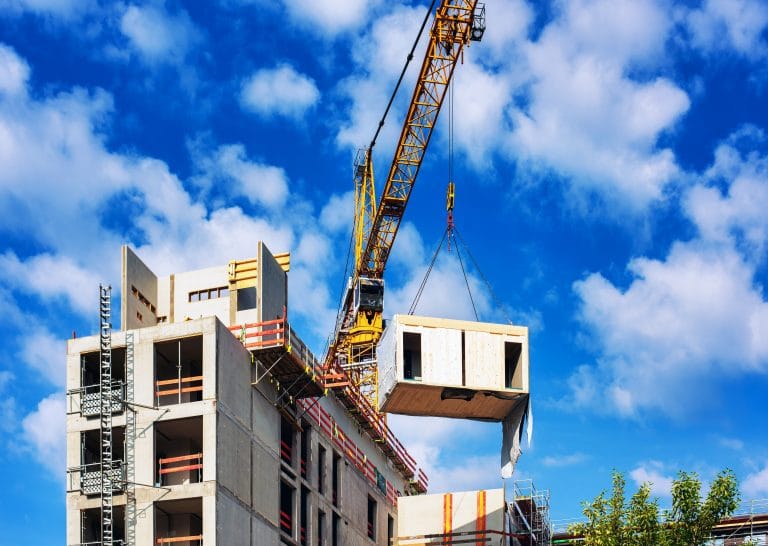
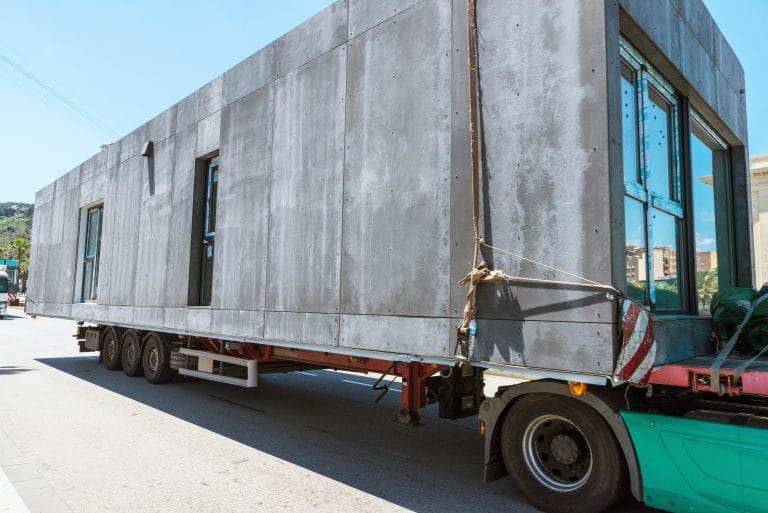
The tallest precast wall you can move on Irish roads with an A-frame trailer is about 3.75 metres. So we had to redesign the lot, splitting the walls into beam-and-column frames. One large wall was split into six to eight smaller elements. Instead of one lift in the factory and one on site, we now needed six to eight lifts at each stage. Erection time went up. So did the cost.
One design decision, made without considering transport, led to rework, extra production steps, more crane movements, and a worse result for the client. Nobody chose badly on purpose. The problem was that nobody with manufacturing knowledge was in the room when the floor-to-floor height was set.
That is where most of the industry’s DfMA problem lives.
The waste nobody puts in a report
When people talk about waste in precast, they usually mean concrete offcuts, water, or carbon. Those matters. But there is another kind of waste that never reaches a sustainability report: wasted design work.
Think about what actually happens on a project that was not designed for precast from the start. The architect draws for cast-in-situ, blockwork, or a steel frame. The structural engineer works on the same assumption. Then a precast engineer, usually the manufacturer’s own, spends weeks, sometimes months, reverse-engineering those decisions. That work is not a design. It is a translation. And every translation loses something: efficiency, cost, or buildability.
The programme is already running while this happens.
This is not unusual. It is the norm in Ireland, the UK, and most of Western Europe. Precast is often picked late, as a way to claw back programme time, after the design has already locked in assumptions that work against it.
The manufacturer absorbs the redesign cost, bears the commercial risk of a custom setup, and then takes the blame when delivery is slower or more expensive than expected. The design process created the problem. The factory gets blamed. The margin disappears.
What changes when DfMA is applied from day one
When precast is chosen as the method at the earliest design stage, the whole logic of the project shifts. Elements are sized for standard moulds and transport limits. Connections are designed for fast assembly, not just structural performance. Reinforcement is planned around what is actually efficient to cage and place. Repetition, the single strongest driver of precast economics, becomes a design goal rather than an afterthought.
The factory programme and the site programme can then run side by side, because both rest on the same set of assumptions.
The standardisation argument, and why the industry resists it
The objection I hear most from architects and developers is that their projects are unique and that standardisation means compromise.
There is something in that, but it confuses two separate things.
DfMA does not mean every building looks the same. It means the components follow a repeatable logic, even when the buildings they form differ each time. Think of a car. Every model has its own body, but the engine mounts, the wiring connectors, and the suspension geometry follow standards that keep manufacturing and servicing efficient. Nobody calls that a compromise.
In precast terms, that means standardised connection details, consistent module dimensions, and coordinated structural grids, while the surface finishes, the facade, and the architectural expression stay specific to the project.
The firms that grasp this treat the structural and manufacturing logic as a fixed base and allow the architecture to vary on top. They tend to do better than the firms that approach every job as a blank sheet. The ones that over-customise, with bespoke structural solutions, one-off mould geometries, and unique connections every time, struggle with factory efficiency and cost. Some have not survived.
The digital side
DfMA does not work well without the right digital setup, but it is worth being plain about what that means.
Building Information Modelling, used properly in a DfMA project, is not a picture. It is a manufacturing brief. Components modelled to the right level of detail, including rebar cages, lifting points, cast-in fixings, and MEP penetrations, give the factory what it needs to produce accurately without guessing.
Most precast quality problems do not start in the factory. They start in the gap between what the designer intended and what the production team actually receives. BIM can close that gap, but only when the model is built by people who understand manufacturing limits, not only building design.
Architects work in BIM. Manufacturers work in BIM. But they are often in different models, to different standards, with different assumptions about what information belongs there and when. Those interface gaps are where coordination fails.
The harder truth about early involvement
None of this happens without bringing manufacturers or DfMA specialists with real technical knowledge into the project early.
A precast manufacturer brought in after tender, with the design already finished, cannot apply DfMA. They have to work within the given design, which means accepting costs and compromises set months earlier. The floor-to-floor height is already fixed. The structural grid is set. The connection philosophy is decided. The manufacturer inherits all of it.
Early contractor involvement, where the manufacturer helps work through manufacturing and logistics constraints during design development, is the practical way DfMA actually happens. It needs a different commercial setup, one where the manufacturer’s input counts as a design contribution and not just a price.
This is normal in Scandinavia and parts of Central Europe, where precast systems are often developed jointly by manufacturers and design teams from the feasibility stage onward. In Ireland and the UK, the default procurement model still pushes manufacturers to the end of the design process and then expects them to carry the consequences.
This is not only a precast observation. The McKinsey Global Institute reached the same conclusion about construction as a whole in its 2017 report, Reinventing Construction: A Route to Higher Productivity. It named rethinking design and engineering as one of seven areas with the potential to close what it put at a $1.6 trillion annual productivity gap. It also found that global construction labour productivity had grown by about 1 per cent per year over the previous two decades, compared with 2.8 per cent for the wider economy. The split between design assumptions and manufacturing reality is a large part of why.
What needs to change
None of this needs new technology or heavy capital to begin. It needs three things.
Clients and developers need to decide earlier. Choosing precast at the concept stage rather than at the planning stage changes what is possible. Once the structural grid is set for a steel frame, unpicking it is expensive.
Architects need a working understanding of precast constraints. Not to become engineers, but to know that a 400 millimetre change in floor-to-floor height can split one precast wall into eight pieces. That knowledge is rare in architecture education in Ireland and the UK, and that has to change.
Precast manufacturers need to push for early involvement rather than wait to be asked. The instinct to quote late and win on price is understandable, but it locks the manufacturer into absorbing every upstream mistake. The savings are made at the design stage, or they are not made at all.
Precast concrete is not a struggling technology. It is a capable, well-proven method that keeps delivering less than it should because of decisions made before the factory is ever involved.
DfMA does not fix the factory. It fixes what feeds the factory. And right now, on most projects in Ireland and the UK, what feeds it is already broken by the time it arrives.
Source
McKinsey Global Institute (2017). Reinventing Construction: A Route to Higher Productivity.