
Why Busy Is Not Efficient: Rethinking Precast Production Planning
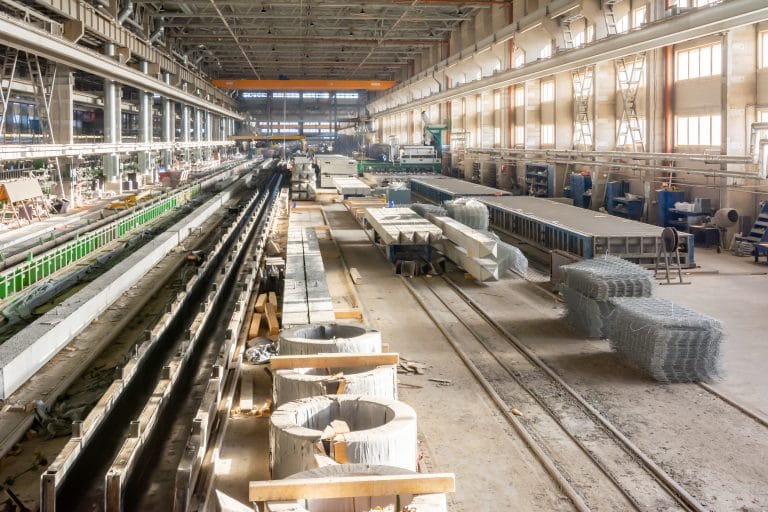
Walk into most precast plants, and you will see beds full, cranes moving, crews working, and very little standing idle. The yard is stacked. Every machine has something on it. To anyone managing the operation, this looks like success. A busy plant feels productive.
I have spent over twenty years inside these operations, and I have learned to distrust that feeling. Busyness and efficiency are not the same thing. In fact, the harder we push to keep every resource occupied, the more waste we tend to create and the more margin we quietly hand back. Most of the problem traces back to how we approach precast production planning, and to a measure of success that quietly works against us.
This is not a motivational point about working smarter. It is a structural one. The way we plan production and projects in precast often works directly against the result we say we want.
Two Kinds of Efficiency, and We Usually Pick the Wrong One
There is a useful distinction at the centre of lean thinking, set out clearly by Niklas Modig and Pär Åhlström in This is Lean. They separate two forms of efficiency that most managers treat as one.
The first is resource efficiency. This is how well we use our resources: our beds, our batching plant, our cranes, our labour. A resource-efficient plant keeps everything occupied as close to full capacity as possible. We see idle equipment as waste, so we feed it constantly.
The second is flow efficiency. This is how quickly a single element moves from the start of the process to the finish, measured against the time it actually spends being worked on. A flow-efficient plant gets each element from mould to dispatch with as little waiting as possible.
These two measures pull in opposite directions, and almost every precast plant I have seen leans hard towards the first. We schedule for utilisation. We judge a good week by how full the beds were, not by how fast each element cleared the plant. That choice has consequences we rarely connect back to the decision that caused them.
Why Keeping Everything Busy Slows Everything Down
There is a simple relationship that governs every process, called Little’s Law. It states that the time it takes a unit to pass through a process depends on two things: how many units are in the process at once, and the pace at which the process completes them.
The implication for precast is uncomfortable. If you want to keep every resource fully loaded, you need a buffer of work ahead of it so the resource never sits idle. More elements in progress mean a longer journey for each one. You have not made the plant faster. You have made each element wait longer, then called the full beds a sign of health.
Modig and Åhlström describe this as a paradox. To reach high resource utilisation, you must always have work queued, which means work is never finished and units always wait. The buffer that keeps your resources busy is the same buffer that stretches out delivery times.
Bottlenecks make this worse. In any sequence of steps, the slowest step sets the pace for the whole line, and work piles up in front of it. Adding pressure elsewhere does not help. It just grows the queue at the constraint while the steps after it sit underused. A plant can be furiously busy on either side of a bottleneck and still be slow overall.
The Hidden Cost: Work That Looks Productive but Adds Nothing
Here is where the margin actually disappears. When elements wait, when too many are in progress at once, and when the process has to stop and restart, problems appear that would not exist in a faster flow. This is Lean calls these secondary needs: needs created not by the customer but by our own failure to move the work through cleanly.
Each secondary need, in turn, generates what the authors call superfluous work. This is the most dangerous kind of waste, because it does not look like waste at all. It feels like real work, and the people doing it feel productive.
Consider what fills the day in a busy plant. Tracking down which element is where in a crowded yard. Re-checking the schedule because the sequence changed. Re-handling stock that was produced ahead of need and now blocks access to what is actually required for dispatch. Holding meetings to expedite a late pour that got buried under everything else in progress. Reworking an element because a defect sat unnoticed in a pile for two weeks instead of being caught at the bed.
None of that adds value a customer would pay for. All of it exists because we ran the plant for utilisation rather than flow. The crews are genuinely busy. They are busy cleaning up after a system that produced too much too early and then let it wait too long.
The more we produce ahead of demand to keep resources loaded, the more inventory we create, the more storage and movement and tracking that inventory demands, and the more chances for damage and rework. Busyness feeds on itself. Each round of superfluous work makes the plant look more occupied and justifies the next round.
How Standard Precast Production Planning Builds This In
The trouble is that conventional precast production planning maximises exactly the wrong thing.
We plan to fill the capacity. A schedule that leaves a bed empty for half a day reads as a planning failure, so we pull work forward to fill the gap, regardless of whether that element is needed soon. We batch by what is convenient to produce together rather than by what the project needs next, which means elements come off the line out of sequence and wait in the yard for the rest of their set.
We measure people and machines on how much they produce, not on how quickly the plant completes a finished, dispatch-ready element. Those local measures push every part of the plant to optimise its own output. Each station looks efficient on its own. The flow throughout the plant suffers because no one is accountable for the element’s journey from start to finish.
Project planning compounds it. When we schedule pours around plant convenience rather than the on-site erection sequence, the plant produces what is easy rather than what the crane needs next week. The elements that matter most sit behind the ones that were simply easier to cast. The plant is full, the customer is waiting, and both of those facts have the same cause.
What Changes When You Plan for Flow
None of this argues for idle resources as a goal. It argues for being honest about what full beds are actually telling you.
A plant that plans for flow accepts some deliberate slack. It does not chase 100 per cent utilisation because the last few points of utilisation cost you long queues and the superfluous work those queues create. Production sits closer to the sequence the customer needs rather than the sequence that keeps every resource loaded. Limiting how much work runs at once means each element clears faster and problems surface while they are still cheap to fix.
The result is a plant that often looks less frantic and delivers more reliably. Fewer elements in the yard. Less searching, less re-handling, less expediting. Defects are caught at the bed instead of in a pile. The crews are doing less superfluous work, which frees real capacity that was always there, hidden underneath the busyness.
The Hardest Part Is Cultural, Not Technical
A quieter plant that flows well can feel wrong to a manager trained to equate full beds with good performance. Letting a resource stand ready rather than stockpiling work in front of it goes against instinct. But the instinct is the problem. The busyness we are proud of is often the clearest sign that the work is not flowing and that the margin is leaking away through all the effort we spend managing the consequences.
Being busy is easy. Any plant can fill its beds. The harder and more profitable discipline is moving each element through cleanly, and the shift that makes it possible is treating precast production planning as a question of flow rather than utilisation. Be willing to look at a calmer plant floor and recognise it as the better-run one.